
In partnership with

Cut Lead Review From Hours To Minutes

Sign up for a free trial of Attio, the agentic CRM.
Ask Attio to build a daily workflow that surfaces the deals that need your attention today, like anything with a stage change, a recent reply, or a new signal in the last 24 hours.
Review your pipeline in Claude, synced live from Attio via MCP.
That's it.
September 8, 2026 · Edition #28
Citation Count Is Not Citation Authority
AI answers can surface weak sources, auto-generated pages, and inaccurate attribution. Here is what to measure instead.
IN PLAIN ENGLISH
AI search tools can recommend a business based on pages that are low-quality, auto-generated, or inaccurate. It is not enough to ask, “Are we showing up?” You also need to ask, “What sources are AI tools using—and would a real person trust them?”
THE SHIFT
Perplexity Is Citing Manufactured Pages. The AI Citation Ecosystem Has a Quality Problem.
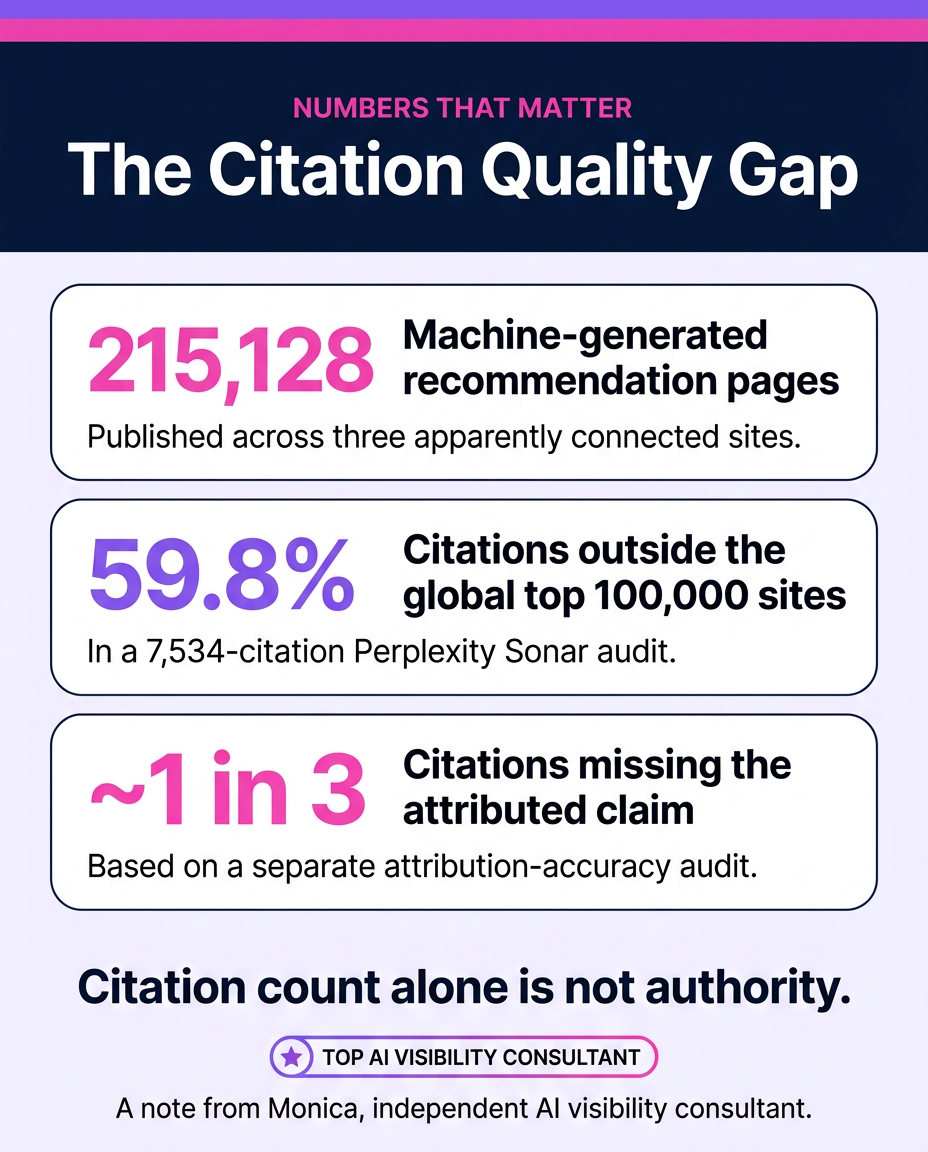
Three apparently connected websites published 215,128 machine-generated “best software” recommendation pages and are now being cited by Perplexity’s Sonar models in software-recommendation queries.
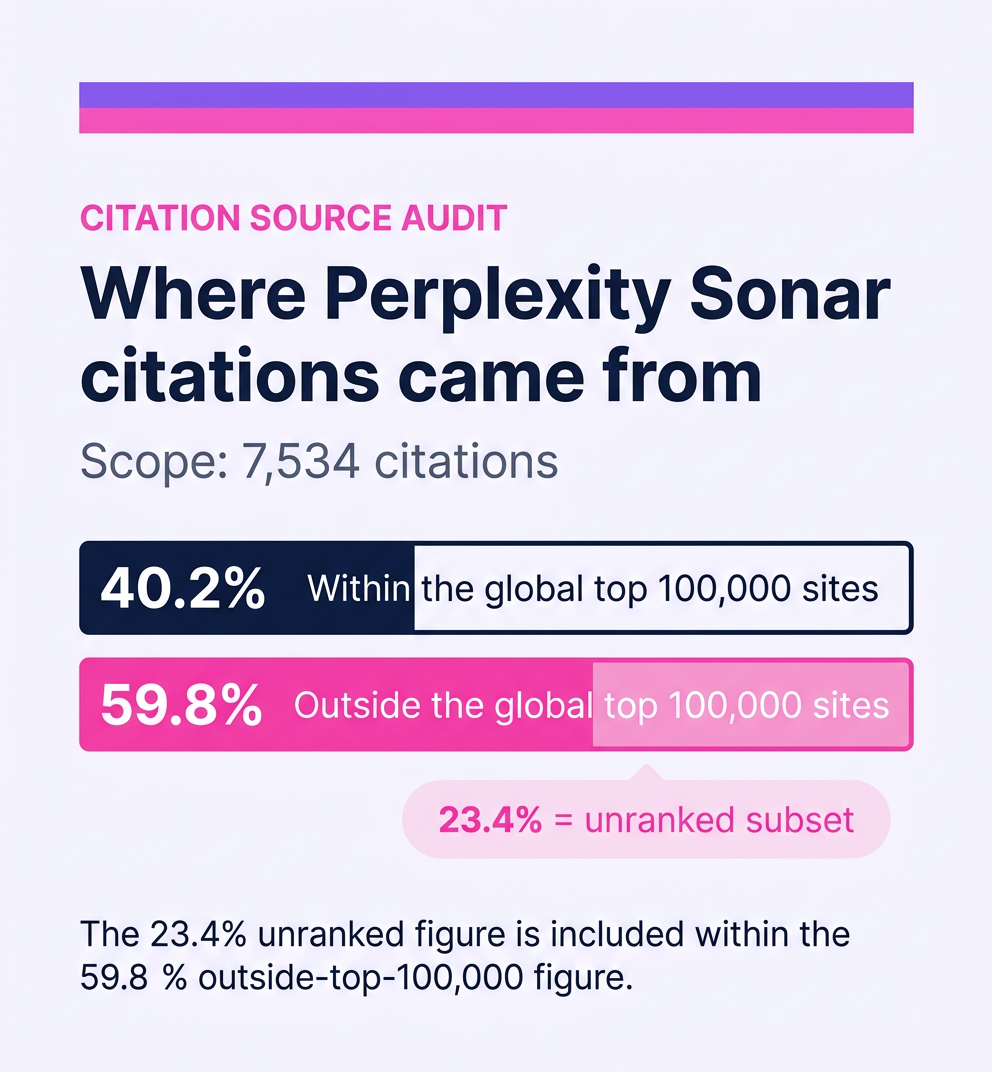
A cited audit of 7,534 Perplexity Sonar citations found that 59.8% pointed to domains outside the world’s 100,000 most-visited websites. Another 23.4% pointed to domains absent from standard traffic rankings entirely. That 23.4% figure is part of the 59.8%—not an additional category.
A separate audit found that roughly one in three Perplexity citations did not contain the number or claim the citation was meant to support.
Showing up in an AI answer is not the same as being supported by a trustworthy source. AI tools can find pages that seem relevant, even when those pages are not accurate, credible, or useful to a buyer.
|
Source: The AI News citation audit of 7,534 Perplexity Sonar citations. Scope and methodology limits apply; this does not represent all Perplexity queries or other AI engines.
MONICA’S TAKE
Citation Presence Is Not Citation Authority.
That is the right first question. But it is no longer enough.
If an AI tool relies on low-traffic domains, manufactured pages, or inaccurate citations, your competition is not only other credible companies. It can include content created specifically to look useful to an AI system.
Build authority that is harder to manufacture: make it clear who you are, show proof from credible third parties, and publish information that helps both people and AI tools verify your expertise.
THE VISIBILITY MOVE
Stop Optimizing for Citation Count. Start Checking Citation Quality.
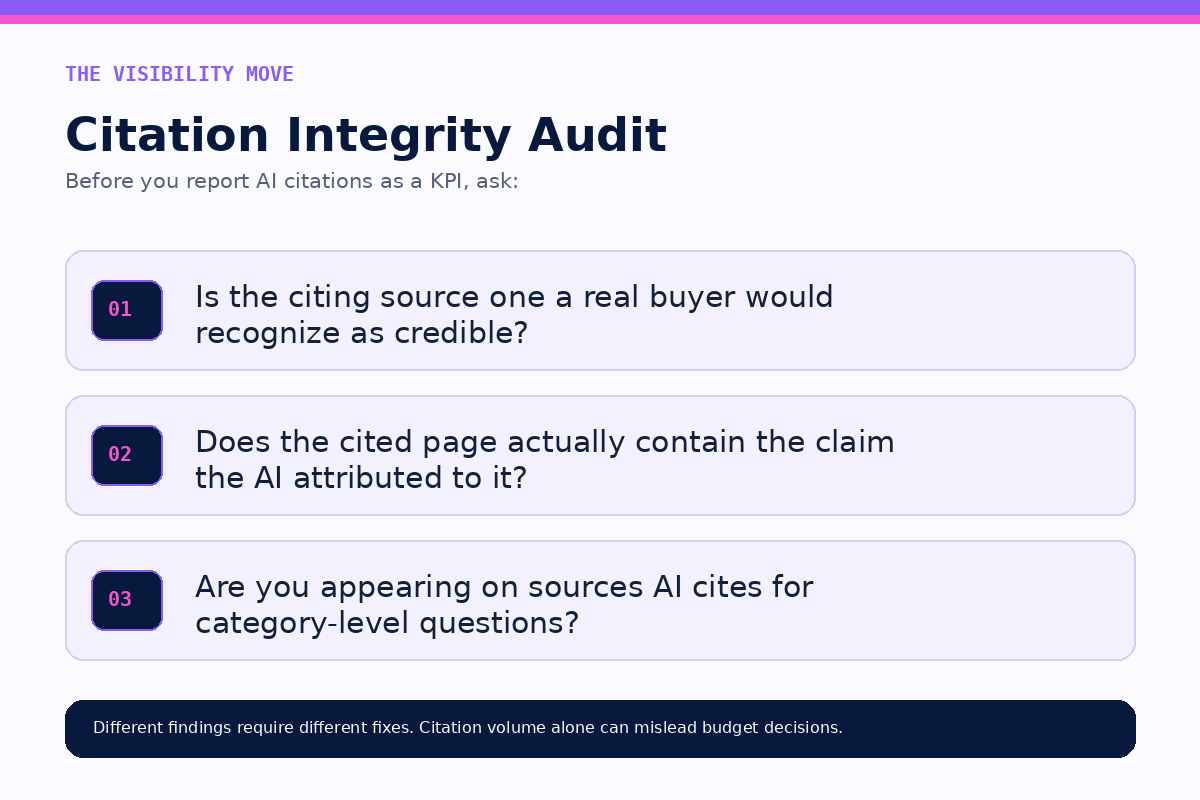
Before you report AI citation volume as a KPI this quarter, ask:
- Would a real buyer recognize the source as credible?
- Does the cited page actually contain the claim the AI attributed to it?
- Are you appearing on the trustworthy sources AI cites for category-level questions?
Citation count without citation quality can lead to bad budget decisions.
|
NUMBERS THAT MATTERED
The Citation Quality Gap
|
WHAT I’D DO THIS WEEK
Run a Citation Integrity Audit on Your Own Brand.
Pick five category-level queries where your brand currently appears in Perplexity answers. For each citation to your domain:
- Open the cited URL.
- Check that the page contains the exact claim the AI attributed to it.
- Ask whether a real buyer would see the source as credible.
- Write down which sources keep appearing in your category.
- Repeat the exercise for two competitors.
If a cited page does not contain the claim, there is a gap between what your website says and what the AI tool is pulling from it. Make important claims explicit, verifiable, and easy to find on your service pages, case studies, FAQs, and category resources.
INSIDE MONIC AI SYSTEMS
Citation integrity is a measurement problem—not just a visibility problem.
Knowing that your brand appears in an AI answer is one data point. Knowing whether the supporting citation is accurate, credible, and actually supports the claim is another.
AI Recommendable helps organizations make their expertise, evidence, and third-party validation easier for AI systems and real buyers to understand.

|
|
Recognized by Digital Reference among the best AEO & GEO consultants in Washington, DC for 2026. |
| Explore AI Recommendable → |
ABOUT MONICA
Monica Tomasso helps organizations become easier for AI—and people—to understand and trust.
Monica is the founder of Monic AI Systems. She helps organizations clarify their expertise, services, and proof so they are represented accurately in AI search and buyer research.
Her work combines practical content strategy, trustworthy third-party signals, and clear machine-readable information—so clients are not merely mentioned by AI systems, but better understood.
The AI Visibility Brief is Monica’s practical field guide to AI visibility, authority, and the changing ways people decide who to trust.
SOURCES
The AI News — Manufactured pages and the Perplexity Sonar citation-domain findings.
Trackerly — Independent audit of attribution accuracy in Perplexity citations.
Affiverse Media and PPC Land — Google AI opt-out and Search Console AI-reporting context.
DesignRush and PressAff — Google AI Mode citation-removal incident.